
Winning Defense Campaign Strategies to Protect Your Brand on Amazon FBA
You've built brand recognition, earned reviews, and your product ranks well organically. Then you search your own brand name on Amazon and find a competitor's Sponsored Product ad sitting directly above your listing. That customer — who typed your brand name because they already know you — is now one click away from buying from someone else.
This is why brand defense campaigns exist. Not to grow your audience. To protect the customers you've already earned.
This guide covers how to detect when competitors are targeting your brand, how to set up the right mix of defensive campaigns, what budget to allocate, and which strategies deliver the best return at the lowest ACoS.
What Is a Defensive Campaign on Amazon?
A defensive campaign on Amazon involves bidding on your own brand name, product names, and ASINs — not to find new customers, but to make sure competitors can't intercept the ones already searching for you.
There are two types of defensive campaigns:
- Keyword defense: Bidding on branded search terms so your ads appear above organic results when someone searches your brand name
- ASIN defense (Product Targeting): Placing your own ads on your product detail pages so competitors can't take those sponsored placements on your listings
Many sellers push back on this — "Why pay to advertise on my own brand search?" The answer is direct: if you don't, someone else will. Amazon allows any seller to bid on any keyword, including your brand name. Not defending it is simply handing competitors your highest-intent traffic at no cost to them.
How to Tell If Competitors Are Bidding on Your Brand Name
Before building a defense strategy, confirm the threat is real for your brand. Here's how to check in under five minutes:
- Open Amazon.com (not Seller Central — the live marketplace)
- Type your exact brand name into the search bar
- Look at the first three results — if you see "Sponsored" labels on products from other brands, competitors are actively bidding on your name
- Also go to your top product's detail page and scroll down — the "Sponsored Products related to this item" carousel is another area competitors target heavily
- In Seller Central, pull your Search Term Report and filter for your brand name — any impressions and clicks on branded terms where you're not running ads means organic traffic competitors are capturing for free
If competitors appear in any of these spots, you have a measurable revenue leak. Defensive campaigns close it.
Why Run Brand Defense Ads on Amazon?
Branded search traffic converts at significantly higher rates than generic category searches — the customer already knows your product and has decided to buy it. That's the most valuable traffic on Amazon, and it's also the most targeted by competitors precisely because of that conversion rate.
Running defense campaigns does five things simultaneously:
- Blocks competitor hijacking — if you don't bid on your brand name, competitors can take top sponsored placements above your organic listing
- Retains high-intent buyers — customers searching your brand name are seconds away from purchasing; letting them see a competitor ad at that moment is a real sales risk
- Controls the buyer journey — you decide what messaging, offer, and products are shown to people looking for your brand
- Dominates SERP real estate — combining Sponsored Products, Sponsored Brands, and organic results means your brand fills the visible screen
- Promotes your broader catalog — defense campaigns can surface product variations or complementary items to customers who came in through a single brand search
Examples of Amazon PPC Defensive Campaigns
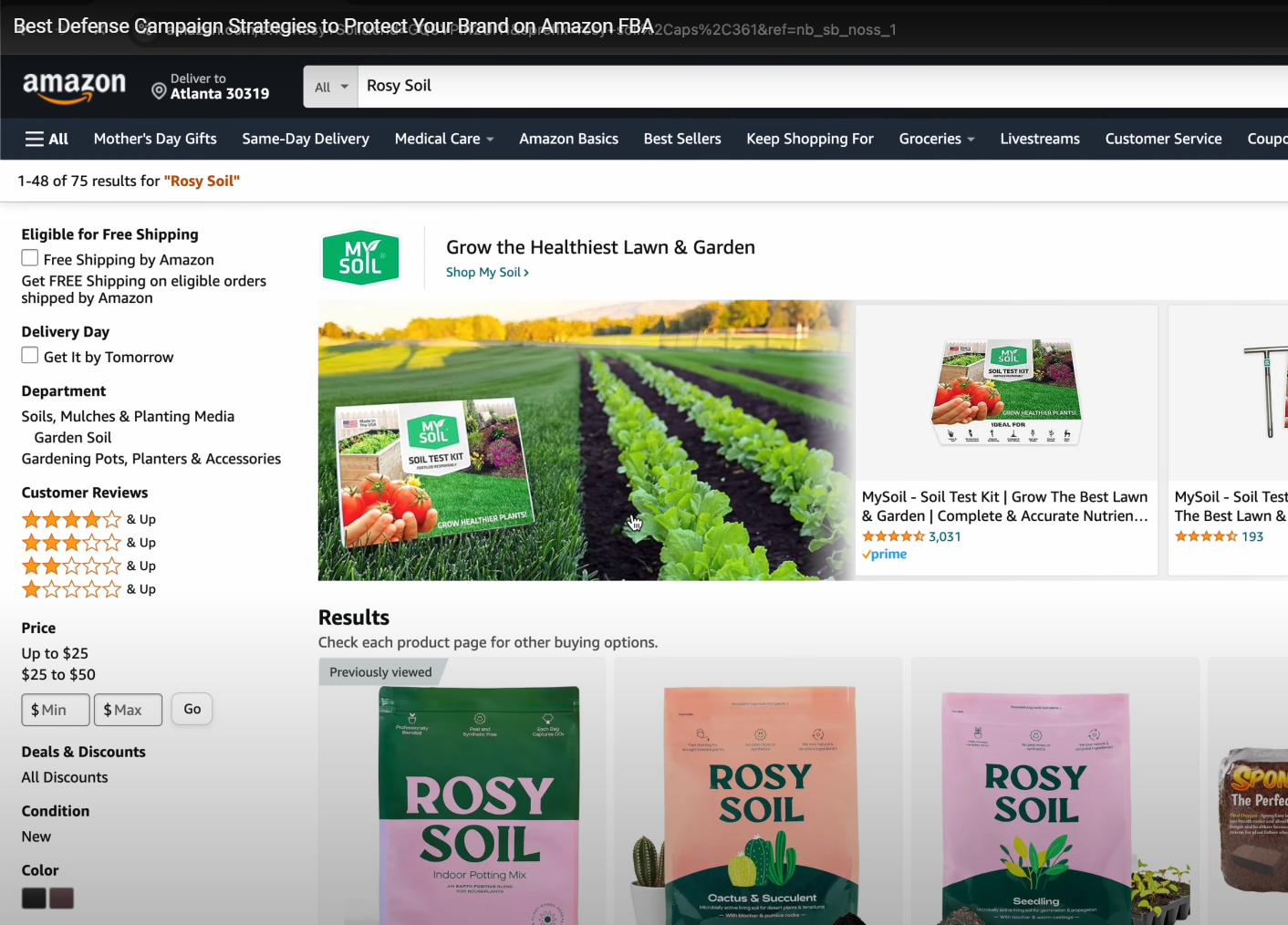
Take Rosy Soil, a brand selling indoor potting mix. When we searched for "Rosy Soil" on Amazon, competitor ads were appearing above their own organic listing — customers searching specifically for Rosy Soil were seeing a different brand's products first.
We ran brand defense Sponsored Products campaigns targeting "Rosy Soil" on exact match, ensuring their ads held the top paid placement. We also set up product targeting campaigns on their own ASINs — so instead of competitor ads filling the sponsored slots on their product pages, Rosy Soil's own products occupied those spots. The result: their brand search traffic stopped leaking to competitors, and the ASIN pages converted at a higher rate because buyers stayed within the Rosy Soil ecosystem rather than clicking away.
How to Create Defensive Campaigns on Amazon
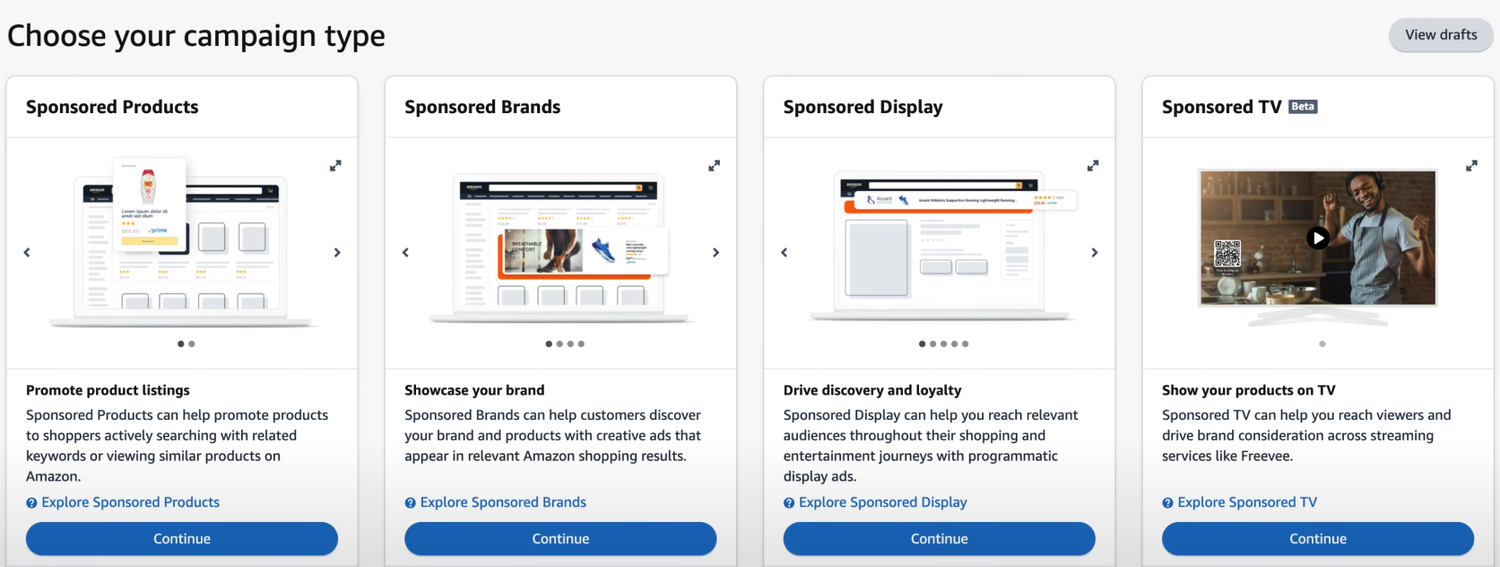
1. Sponsored Products — Branded Keyword Campaign
This is the core of any brand defense setup. Create a manual Sponsored Products campaign targeting your brand name and key product names on exact match. Exact match only — broad or phrase match can bleed budget on irrelevant searches. Set bids high enough to hold the top placement consistently. Because branded searches convert well, the ACoS on this campaign will typically be your lowest across all campaigns — which justifies the spend.
2. ASIN-Level Defense with Product Targeting
Add all your ASINs as targets in a Sponsored Products or Sponsored Display product targeting campaign. Every variation — not just your top sellers. The goal isn't cross-selling (though that happens). The goal is occupying the sponsored placement on your own detail pages before a competitor buys it. If a competitor wins that placement and converts the customer, you've lost a sale and they've gained a potential repeat buyer. Start bids at the same level as your branded keyword bids and adjust based on placement data.
3. Sponsored Brands — Search and Storefront Defense
Sponsored Brands ads appear at the very top of search results — above Sponsored Products. Running a Sponsored Brands campaign on your brand name means you can simultaneously hold the top banner position (Sponsored Brands) and top product position (Sponsored Products), pushing all competitor ads further down the page. Link to your Amazon Storefront rather than individual product pages — it gives buyers a curated brand experience and removes all competitor products from view.
4. Sponsored Brands Video
Sponsored Brands Video placements currently deliver click-through rates significantly higher than standard static banner ads — the movement and autoplay format catches attention in ways that images don't. For brand defense, video ads on your branded keywords reinforce brand identity while holding valuable SERP real estate. If you have product demo footage or a simple brand video, this placement is one of the highest-return defense options available.
5. A+ Content Comparison Chart — Free Brand Defense
This is the one defense strategy that costs nothing in ad spend. Amazon's A+ Content module includes a comparison chart that lets you showcase multiple ASINs from your own catalog on a single product page. When buyers land on your listing and scroll down, instead of seeing a competitor's sponsored carousel, they see your other products presented as alternatives. It keeps cross-shopping within your brand. Requires Brand Registry enrollment but has no per-click cost.
ACoS Benchmarks for Amazon Brand Defense Campaigns
Sellers often get confused when their brand defense campaigns report higher ACoS than expected. The right way to read defense campaign metrics is different from performance campaigns:
| Campaign Type | Typical ACoS Range | How to Read It |
|---|---|---|
| Branded keyword defense | 5–15% | Usually the lowest ACoS in your account — high intent buyers convert fast |
| ASIN product targeting | 10–25% | Defense value exceeds the CPC — cost of a lost customer is higher than cost of the click |
| Sponsored Brands (brand name) | 15–30% | Brand awareness and SERP dominance — evaluate alongside organic sales lift |
| Sponsored Brands Video | 10–25% | CTR is high; factor in brand recall value beyond direct conversions |
The key principle: don't optimize defense campaigns the same way you optimize growth campaigns. For growth, you minimize ACoS. For defense, you maintain placement. A slightly higher ACoS on a brand defense campaign is acceptable if the alternative is a competitor converting your highest-intent customers at zero ad cost.
Budget Allocation: How Much to Spend on Brand Defense
A widely used benchmark is allocating 15–20% of your total Amazon PPC budget to brand defense. For most sellers, this is enough to hold top placements on branded keywords and ASIN pages without significantly impacting budget available for growth campaigns.
Adjust this based on competitive pressure: search your brand name weekly. If competitors consistently appear above your organic listing, increase defense budget until you consistently hold top paid placement. If you're in a low-competition niche where no one bids on your brand, branded keyword defense can be reduced and the budget reallocated to growth campaigns.
One practical check: in your Search Term Report, look at what competitors are spending on your branded terms. The impression share data in your Sponsored Brands campaigns also shows how often your brand is winning the top position versus being outbid.
Amazon Brand Registry: The Foundation of Brand Defense
Running effective defense campaigns requires access to Sponsored Brands and A+ Content — both of which are locked behind Amazon Brand Registry enrollment. If you haven't enrolled yet, that's the first step before any of the strategies above are fully available to you.
Brand Registry also unlocks:
- Amazon Stores — a dedicated branded page with no competitor products visible
- Brand Analytics — shows you which competitor keywords are driving traffic to your category, including your branded searches
- Amazon Vine — accelerates review acquisition, which strengthens both organic ranking and ad conversion rates
- Project Zero and Transparency — tools that actively prevent counterfeit listings and unauthorized sellers from damaging your brand reputation
Brand Registry enrollment requires a registered or pending trademark in the relevant market. For sellers expanding to the US, a Professional seller account is also required. The combination of Brand Registry plus active defensive campaigns is the minimum viable brand protection setup for any established Amazon seller.
Best Practices for Amazon PPC Defense Campaigns
Monitor Branded Search Terms Weekly
Pull your Search Term Report weekly and filter for your brand name. Look at impression share — if competitors are capturing a meaningful percentage of impressions on your branded terms, your bids may need to increase. Also watch for competitor brand names appearing in your search terms; that's a sign they're using your brand in their broad match targeting, which you can block with negative keywords.
Separate Defense and Growth Campaigns
Keep branded defense campaigns completely separate from generic category campaigns. Mixing them makes it impossible to accurately track ACoS by intent type and leads to budget being shifted away from defense during optimization. Label them clearly in Amazon Ads console — "Brand Defense — Exact," "ASIN Defense — Product Targeting" — and review them with different performance benchmarks than your growth campaigns.
Use Sponsored Display for Retargeting
Sponsored Display ads can retarget shoppers who viewed your product page but didn't buy. Running retargeting on your own audiences ensures that a competitor ad isn't the next Amazon ad that customer sees. It's an underused but low-cost layer of brand defense that works outside of search results entirely.
A/B Test Creatives on Sponsored Brands
Amazon's Sponsored Brands now support creative testing. Run two versions of your brand headline — one focusing on your bestseller, one showing multiple products — and let performance data pick the winner. Small changes in headline copy or the lead product shown can meaningfully affect CTR on branded searches.
Quick Setup Checklist: Defense Campaigns on Amazon
- Log in to Amazon Advertising Console
- Create a Sponsored Products campaign → Manual Targeting → Exact Match → brand name + product name keywords
- Create a second Sponsored Products campaign → Product Targeting → add all your ASINs including variations
- Create a Sponsored Brands campaign → target brand name keywords → link to Amazon Storefront
- If you have video assets → add a Sponsored Brands Video campaign on branded keywords
- In Seller Central → Manage A+ Content → add a comparison chart featuring your own ASINs
- Set a weekly calendar reminder to check Search Term Reports and impression share data
Benefits of Running Brand Defense Campaigns
- Lower ACoS than growth campaigns — branded searches convert faster, making defense campaigns your most cost-efficient ad spend
- Higher conversion rates — buyers searching your brand name already have purchase intent, so every defended impression counts
- Revenue protection — you stop paying for brand building while competitors collect the sales at the bottom of the funnel
- Full SERP control — combining Sponsored Products, Sponsored Brands, and organic results lets you dominate the visible search page for your brand
- Customer retention — loyal customers who stay within your brand ecosystem are more likely to become repeat buyers
Frequently Asked Questions
Can competitors legally bid on my brand name on Amazon?
Yes. Amazon allows any seller to bid on any keyword, including your brand name. There's no restriction on branded keyword targeting by competitors unless you have a trademark and the competitor is using it in their actual ad copy or product title — that would be a trademark infringement case handled through Brand Registry. Bidding on your brand as a keyword alone is permitted under Amazon's advertising policies, which is why defensive campaigns are necessary.
Do I need Amazon Brand Registry to run defensive campaigns?
You need Brand Registry to access Sponsored Brands ads and A+ Content — both important parts of a full defense strategy. Sponsored Products campaigns targeting your brand keywords don't require Brand Registry and are available to all Professional sellers. However, without Brand Registry you can't hold the top Sponsored Brands banner placement, which means competitors with Brand Registry can outrank you even on your own branded searches. Enrolling in Brand Registry is strongly recommended before investing heavily in brand defense.
What ACoS should I target for brand defense campaigns?
Branded keyword defense campaigns typically run at 5–15% ACoS — naturally lower than category campaigns because of the high purchase intent of branded searchers. ASIN product targeting campaigns run slightly higher, around 10–25%. The right question for defense isn't "what ACoS target should I set?" — it's "am I maintaining top placement on my branded searches?" ACoS is a secondary metric here. Placement is primary.
How much of my PPC budget should go to brand defense?
A common benchmark is 15–20% of total Amazon ad spend allocated to brand defense. The right number varies: if you're in a heavily competitive category where multiple brands actively target your keywords, you may need to go higher. If you're in a niche where competitor targeting is low, you can defend with less and allocate more budget to growth campaigns. Search your brand name weekly — the presence of competitor ads is your real-time indicator of whether your defense budget is sufficient.
Can brand defense campaigns improve my organic ranking?
Indirectly, yes. Defense campaigns drive additional clicks and conversions on branded searches. Amazon's algorithm uses sales velocity and conversion rate as organic ranking signals. Consistently converting branded traffic reinforces your relevance score for those terms, which can lift organic rankings over time. The more directly measurable benefit is that defense campaigns protect your current organic rank — without them, a competitor capturing your branded traffic can build their own sales velocity on searches associated with your brand.
Want Help Setting Up and Managing Your Amazon Defense Campaigns?
Building the right campaign structure, setting defensible bids, and monitoring competitors consistently takes time that most brand owners don't have. At YourSeller Agency, our team handles Amazon advertising campaigns end-to-end — from initial brand defense setup to ongoing bid management and Search Term Report analysis — so your brand holds its ground while you focus on growing it.
We also manage A+ Content and listing optimization alongside advertising, ensuring your defense strategy is backed by listings that convert at the highest possible rate once the defended traffic lands.
Our 90-day sprint model — no long contracts, no fluff, measurable results from month one.
