
Amazon SEO vs Amazon PPC: Where Should Your Budget Go First?
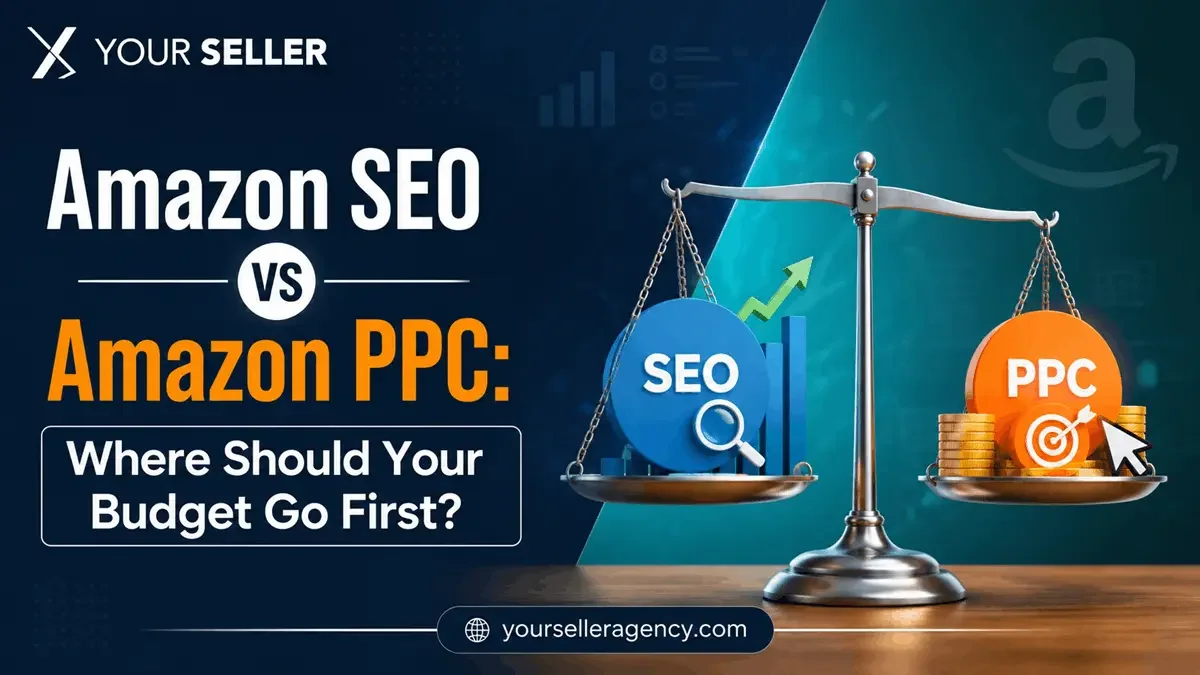
Most sellers ask this question backwards. They ask "SEO or PPC?" The real question is which one fixes what's actually holding sales back right now. If you're weighing amazon SEO services against a bigger ad spend, the honest answer depends less on preference. It depends on where your listing actually sits today.
Amazon SEO services should come first when your listing has weak titles or thin bullet points. Backend keywords that don't match how buyers search are another sign. PPC should lead when the listing already converts well but simply lacks visibility. Spending on ads before fixing a weak listing usually means paying for clicks that never convert.
Amazon makes this decision harder than it looks, too. On Google, SEO and PPC run as genuinely separate channels. Amazon's ranking algorithm treats paid clicks and organic sales as part of the same signal. Get that sequencing wrong, and you can spend months of ad budget propping up a listing that organic optimization should have fixed first.
Why Amazon SEO and PPC Aren't Separate Budgets
The amazon PPC vs SEO debate usually treats the two channels as rivals fighting for the same dollar. On Amazon, that framing doesn't hold up. On Google, SEO and PPC results sit in different parts of the page. They rarely interact directly. Amazon works differently.
The A10 algorithm factors sales velocity into organic ranking. Conversion rate and click-through rate matter too. PPC is one of the fastest ways to generate exactly those signals.
A well-run PPC campaign can lift your organic rank over time. A poorly optimized listing can quietly sink your ad performance, no matter how much you spend. Amazon SEO services and Amazon PPC services function as one connected system. They are not two competing line items on a marketing budget.
This is the biggest thing sellers miss when they copy a Google-style "70% PPC, 30% SEO" split from a generic marketing guide. That ratio assumes the two channels barely touch each other. On Amazon, they feed each other constantly. Ignoring that connection is how ad budgets get wasted on listings that were never going to convert.
We saw this play out with a home goods seller last year. They had run Sponsored Products for four months at a 38% ACoS with almost no organic movement. The listing itself was the problem: a generic title, no A+ content, and bullet points written for compliance instead of search intent.
A three-week listing rewrite fixed it, without touching the ad budget at all. ACoS dropped to 19% within the same campaigns. More of the existing paid traffic simply started converting once the listing matched what buyers were actually searching for.
What Amazon SEO Services Actually Fix vs What PPC Buys
It helps to be specific about what each channel does. The vague version of this comparison, "SEO is long-term, PPC is short-term," doesn't tell you what to fix first. Amazon product SEO and paid ads solve different problems, and mixing them up is where budgets get wasted.
Amazon SEO Services Fix the Foundation
Amazon product SEO covers title structure, bullet point clarity, and backend search terms. It also covers A+ content, image quality, and how well your listing matches real buyer search language. This is the same foundational work top-performing Amazon sellers treat as non-negotiable before scaling ad spend. None of it costs anything extra to run once it's built, and it compounds. A properly optimized listing keeps converting at the same rate whether you're spending on ads that week or not.
PPC Buys Immediate Placement
Sponsored ads put your product in front of shoppers regardless of your current organic rank. That's valuable for new launches with zero sales history. Amazon's algorithm has nothing to rank yet in those cases. Well-structured Amazon PPC management can generate that early sales velocity fast. The moment you pause the campaign, though, that visibility disappears. Nothing about PPC persists on its own.
Where the Two Actually Meet
The overlap point is conversion rate. A PPC campaign driving traffic to a listing with unclear bullet points shows a high ACoS no matter how well the campaign itself is structured. A weak main image causes the same problem. Amazon SEO experts often find that a listing rewrite drops ACoS faster than any bid adjustment. It fixes the leak the ads were pouring budget into.
Think of it as a bucket with a hole in it. PPC is the tap pouring water in faster. SEO work patches the hole. Turning the tap up further without patching the hole just means paying more to keep the bucket at the same level.
A 4-Factor Readiness Score for Deciding Where to Start
Rather than guessing, run your listing through four factors before allocating budget. Score each one honestly from 1, meaning weak, to 3, meaning strong. Then read the total against the guidance below.
| Factor | Score 1 (Weak) | Score 2 (Moderate) | Score 3 (Strong) |
|---|---|---|---|
| Listing quality | Generic title, no A+ content, few images | Decent copy, basic A+ content | Keyword-rich title, full A+ content, lifestyle images |
| Review base | Under 10 reviews | 10–50 reviews, 3.5–4.2 stars | 50+ reviews, 4.3+ stars |
| Category competition | Dominated by established brands | Mixed, some ranking opportunity | Fragmented, room to rank organically |
| Budget runway | Under 2 months of ad spend available | 2–6 months available | 6+ months available |
A total score of 4 to 6 means fix the listing first. Amazon SEO services should take priority before any meaningful ad spend goes out. A score of 7 to 9 means run both in parallel, weighting slightly toward SEO. A score of 10 to 12 means your listing is ready. PPC can carry more of the near-term weight while SEO work continues in the background.
This scoring approach isn't something you'll find in most generic SEO-versus-PPC comparisons. Most of those are written for websites, not for a platform where the algorithm itself links the two channels together.
When Leading With PPC Actually Makes Sense
There are real situations where PPC should go first. Pretending otherwise does sellers a disservice.
New product launches with zero organic history need PPC first. Amazon's algorithm has no sales data yet to rank the listing on its own. There simply isn't organic data for SEO alone to work with.
Seasonal windows reward front-loaded ad spend too. A UK Black Friday push doesn't leave time to wait for organic improvements to mature. Neither does a US Prime Day cycle. PPC has to carry more of the load in those short windows.
Highly competitive categories with entrenched top-3 listings are another case worth naming honestly. Even excellent Amazon SEO takes time to move the needle against sellers with thousands of reviews. PPC buys visibility while that organic work compounds quietly in the background.
When Amazon SEO Services Should Lead
The clearest sign SEO should come first is a listing that already gets traffic but converts below category average. Increasing ad spend on a listing that converts poorly just raises ACoS. It doesn't fix the underlying problem — the same pattern shows up often with unprofitable UK PPC campaigns, where the ads were never the actual issue.
Sellers with limited monthly budgets benefit from leading with SEO too. This applies especially to sellers expanding into the UK or India after building a US presence. One strong Amazon SEO services engagement builds a listing that keeps working across all three marketplaces. It doesn't require a separate ad budget for each country from day one.
Mature catalogs with stagnant rank usually need a content refresh more than a bigger ad account. Sales have plateaued, and reviews have stopped growing. In practice, this is the audit request we hear most often. Sellers try increasing PPC spend first, then come to us when no organic movement follows it. A listing that's been live for two or three years often still runs on the original launch copy, written before Amazon's search algorithm shifted toward matching longer, more specific buyer phrases.
Building the Long-Term Split
Once a listing clears a 7-plus readiness score, the question changes. It shifts from "which channel first" to "what ratio, on an ongoing basis." A workable starting point for most established sellers looks like 60% of budget toward Amazon SEO services and marketplace management. The remaining 40% sustains PPC on the highest-converting keywords.
Adjust that split based on ACoS and organic rank movement each 90-day cycle. The ratio isn't fixed. Sellers heading into Q4 or a Prime Day window often flip it temporarily, then shift back toward SEO once the seasonal spike passes.
Treating whatever ratio worked at launch as permanent is the mistake worth avoiding here. A catalog that matures still needs the split revisited every quarter, not set once and forgotten.
There's no universal answer to whether amazon SEO services or PPC should get your first dollar. What decides it is your listing's current readiness. It isn't a generic industry rule of thumb borrowed from Google marketing. Score your listing honestly against the four factors above. Let that score, not habit or a competitor's approach, set your starting allocation.
Sellers who treat SEO and PPC as one connected system spend less to reach the same rank. Those who pick a channel out of preference and stick with it regardless of listing readiness end up paying for it in wasted ad spend.
Frequently Asked Questions
Is Amazon SEO or PPC better for a brand-new listing with no sales history?
PPC typically needs to lead for a brand-new listing. Amazon's algorithm has no sales data yet to rank it organically. Amazon SEO services should still run alongside the launch, so the listing converts well once ads start driving traffic.
How long does Amazon SEO take to show ranking improvements?
Initial movement from listing optimization can appear within two to four weeks. Meaningful rank changes typically take 60 to 90 days, since the algorithm evaluates updated conversion and sales data over that period.
Can I stop PPC once my organic ranking improves?
You can reduce it, but stopping entirely often causes a visibility dip. PPC still contributes to the sales velocity signals that support organic rank. Most sellers taper PPC gradually rather than cutting it off all at once.
Do I need separate Amazon SEO budgets for the US, UK, and India marketplaces?
Each marketplace has its own search behavior and competition level. Listings typically need marketplace-specific keyword research even when the core SEO work overlaps. Budget requirements vary more by category competitiveness than by country alone.
What's a realistic monthly budget for Amazon SEO services?
Costs generally scale with catalog size and category competition. They can range from a few hundred dollars a month for a small catalog to several thousand for larger, highly competitive portfolios. An audit gives you a specific figure rather than an industry average.
Ready to Find Out Where Your Budget Should Go First?
If you're not sure whether your listings are ready for more ad spend or need SEO work first, guessing gets expensive fast. YourSeller runs a full readiness check across your titles, backend keywords, A+ content, and conversion data. Unlike generic ecommerce marketing services that apply the same SEO-PPC split to every client, we recommend where your next dollar should go based on your actual listing, whether that means Amazon PPC management or a listing-first approach.
As an Amazon growth agency working across the US, UK, and India, we build this readiness score into every audit. That means you're never spending on the wrong channel first.
Book a Free SEO Audit with our team and get a clear, data-backed answer for your specific catalog before you spend another dollar guessing.
