
Amazon Live Influencer Marketing Strategies to Drive Real-Time Sales
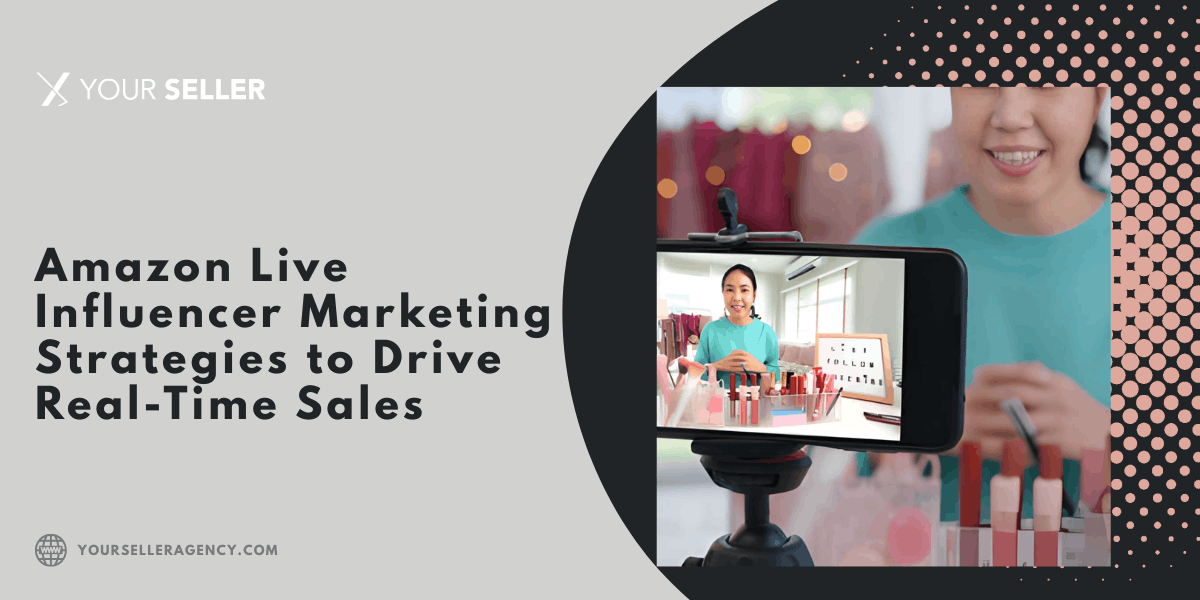
A shopper scrolling Amazon at 9 PM doesn't want another bullet-point list. They want proof. Someone holding the product. Answering the question they were about to type into the search bar. Amazon Live influencer marketing gives brands exactly that moment. In 2026, it has stopped being a side experiment for most serious sellers.
US livestream commerce sales crossed roughly $50 billion in 2023. Coresight Research projects the figure will reach $68 billion by 2026, over 5% of total ecommerce activity. Amazon has invested heavily to match that growth. Creator Connections launched as a managed marketplace. Amazon added Sponsored Products for Creators in 2026, letting creators earn on a per-click basis, not only through commission. For sellers in the US, UK, or India, Amazon Live influencer marketing is now infrastructure, not a novelty.
Amazon Live influencer marketing is the practice of partnering with, or acting as, a live video host on Amazon's platform. A host demonstrates a product on camera while viewers watch, comment, and buy directly from a shoppable carousel without ever leaving the stream.
It works because it compresses the normal gap between discovering a product and trusting it enough to buy. A static listing shows photos and bullet points. A live stream shows the product in someone's hands, answering the exact question a shopper was about to type into search, while Amazon surfaces the video inside product pages and search results, not on a separate tab.
Most guides describe what a stream looks like. Few answer the operational question that actually determines whether it makes money: who should host it, what it costs, and how you know in advance if the format is worth the budget. That's the gap this guide closes, starting with the decision most sellers skip straight past.
What Is Amazon Live Influencer Marketing?
The broadcast runs on Amazon's own servers, not a third-party platform, and it sits directly on the product's detail page or in Amazon's Live tab. Viewers never click away to watch it.
The mechanics separate it from a standard video ad. A host broadcasts through the Amazon Live Creator app, and a product carousel runs beneath the video feed. When the host mentions an item, they "highlight" it, and it pops into the viewer's window. One tap adds it to the cart.
This is a two-way format, not a broadcast. Hosts read live comments as they arrive. They respond on camera — "yes, it runs small," "here's the seam up close, hold on." Amazon calls this shoppertainment. That real-time back-and-forth is the mechanism that makes Amazon Live commerce marketing convert at rates static listings rarely reach.
Brand-Led vs. Creator-Led vs. Creator Connections: Which Format Fits Your Goals?
Before booking a single stream, decide who's actually running it. Most brands skip straight to hiring an influencer without weighing the alternative. That gets expensive fast if the format doesn't fit the brand's stage — worth pausing on if you're also weighing a broader influencer marketing services engagement rather than a single stream.
Amazon supports four distinct activation paths. Each carries a different cost-and-control trade-off.
Brand-Led Streams
Hosted directly from your own Seller Central account, using your own team. No commission or talent fee applies — the cost is entirely internal time. You're responsible for camera setup, lighting, and keeping 30 to 60 minutes of energy up on your own.
Creator-Led Partnerships
You negotiate a flat fee, a commission, or both, with a creator you personally select and vet. You get full say over who represents your brand. Sourcing and vetting genuinely takes time — plan for a search cycle of several weeks, not days.
Creator Connections
Amazon's own managed marketplace matches brands with vetted creators. Commission rates typically run 4% to 15%, paid only on performance. It's the fastest route to a matched host. The payout mechanics are worth understanding before committing — we cover exactly how matching and payouts work in our Creator Connections breakdown.
Amazon Influencer Program Creators
These creators already run an established storefront and audience. You don't direct them directly. You get featured in their existing content and streams instead, trading control for reach you didn't have to build.
A confident in-house presenter and a tight budget point toward testing brand-led streams first. Chasing reach from an audience you don't yet have points the other way, toward Creator Connections or a direct partnership. There's an honest trade-off worth naming: brand-led streams save on fees but rarely match a known creator's watch time in the first few weeks. Budget for a slower ramp if you go this route. Don't judge the format off one or two early broadcasts.
| Format | Cost Structure | Control Level | Best For |
|---|---|---|---|
| Brand-Led | No commission or talent fee; internal time cost only | Full control | Testing the format, tight budgets |
| Creator-Led (Direct) | Flat fee, commission, or both — negotiated | High — brand selects the host | Brands with a specific creator in mind |
| Creator Connections | 4%–15% commission, performance-based | Moderate — Amazon handles matching | Fast host matching without manual sourcing |
| Influencer Program | Commission on resulting sales | Low — brand is featured, not directing | Borrowing an existing creator's built-in audience |
How Do You Structure a Stream That Actually Converts?
A stream that sells isn't improvised. Professional hosts follow a sequence. Knowing it lets you judge whether a partner, or your own team, is running it correctly.
The first five minutes tease the offer while the host quietly checks audio and lighting. Minutes five through fifteen build the problem the product solves, before the product itself appears on screen. That patience is deliberate. A stream that opens on the product reads as an ad, not a shopping experience, and viewers scroll past ads.
The reveal comes next. The host highlights the product in the carousel and performs an unboxing, so viewers see exactly what arrives at their door. Then comes the demo — the part where trust actually gets built. A phone case gets dropped from waist height. A concealer gets applied under the stream's own lighting, no filter. This is the moment a viewer decides whether to believe the claims on the listing page.
The close is Q&A followed by urgency. The host works through live chat questions, then reminds viewers the promo code expires when the stream ends. Skip any one of these five beats and the whole sequence weakens. Most commonly, brands rush the fifteen-minute problem-framing stage. The resulting stream feels transactional instead of persuasive.
Extending Reach Beyond the Stream Itself
Two tactics stretch a single stream's value well past its live window.
Simulcasting solves the retargeting problem. A live Amazon broadcast can't be retargeted the way a paid social ad can. The workaround: the host goes live on Instagram at the same moment, sharing a code that's "only available on my Amazon Live right now." That pushes already-warm, high-intent traffic straight into the Amazon stream. The resulting spike in external traffic is a signal Amazon's ranking algorithm rewards.
The educational deep-dive format works for anything with a learning curve — supplements, tech gadgets, skincare with an application method. A thirty-second product ad can't teach latte art. A 45 to 60-minute masterclass can, with the product as the tool rather than the pitch. This format justifies a higher price point, since it demonstrates ongoing value instead of a single feature.
What's New in 2026: Sponsored Products for Creators and the Live Economics Shift
Most guides to this topic are still describing 2024's version of Amazon Live. Two developments from this year change the math for brands planning a program rather than a single stream.
Amazon rolled out Sponsored Products for Creators in 2026, layered on top of standard Sponsored Products campaigns. Once a brand runs Sponsored Products ads, eligible creators can browse those advertised listings and opt in to feature them, earning a per-click payout on top of their normal Associates commission. For brands, this means an existing PPC budget can now pull in creator content without a separate Creator Connections deal or a negotiated flat fee. It's a lower-commitment way to get creator eyes on a listing before deciding whether a full Live partnership is worth negotiating.
The second shift sits in creator supply economics. Industry tracking from Logie Buzz's 2026 creator-income analysis puts typical macro-influencer (50K–1M followers) Amazon Live campaign earnings in the thousands of dollars per engagement when bundled with storefront placements. That's up meaningfully from 2025, as brands increasingly request full livestream packages rather than a single mention. In practice, a creator with strong Live-hosting experience now expects to be briefed like a paid media partner. Not sent a free unit and a hopeful DM. Brands that still approach outreach the old way lose the strongest hosts to competitors offering clearer, better-structured deals.
There's a trade-off worth stating plainly. This shift raises the entry cost for creator-led partnerships at the macro tier. That's exactly why brand-led and Creator Connections streams have become the more accessible on-ramp for sellers without an established influencer budget.
Compliance, Measurement, and Deciding If a Stream Is Worth Running
Every stream involving a paid or gifted relationship needs a clear, conspicuous disclosure. It must sit close to the point of endorsement, not buried in a bio. Amazon's guidance and the FTC's material-connection standard both apply here, and they agree on the core point: if there's a free product, a commission, or a flat fee involved, the relationship must be obvious to the viewer throughout the broadcast, not just in the opening seconds. Keep a written claim library for what a host can and can't say about your product. Review the stream recording afterward. A single undisclosed partnership can trigger both an FTC complaint and an Amazon policy strike, and cleaning that up costs far more than the stream itself ever would.
On measurement, vague brand-awareness numbers won't justify a repeat budget. Track glance views — how many times your detail page was viewed during the stream. Track carousel click-through rate too. Chat engagement matters as well, as a proxy for purchase intent among viewers who don't buy immediately. Amazon's attribution window for Live-driven sales runs 14 days. That's longer than most social platforms offer, which makes proving out Amazon Live shopping strategy easier than proving out a typical Instagram campaign. If your program also drives external traffic through creator links, that traffic can separately qualify for Amazon's Brand Referral Bonus. It's worth checking against your current setup — we walk through the tracking side of this in our guide to Amazon Attribution for Instagram.
The 3-Signal Go/No-Go Check
Before committing budget to a full stream, we run new clients through three questions rather than jumping straight to booking a host.
Does the product have a genuine demo moment? Something that looks meaningfully different in motion than it does in a static photo. If not, a stream won't outperform strong images.
Can you forecast at least three times normal sales volume, and hold that inventory? Running out mid-broadcast kills momentum. It also drags down Best Seller Rank at exactly the wrong time.
Does someone on the team, or the creator you're vetting, have the on-camera composure to handle an unscripted chat question without going quiet? If the honest answer is no across all three, brand-led is the wrong starting format. Start with a creator partnership instead, or hold off until the product or team catches up.
Frequently Asked Questions About Amazon Live Influencer Marketing
How does Amazon Live influencer marketing work?
A brand either hosts its own broadcast or partners with a creator who does. Amazon handles the technical side — the shoppable carousel, the chat window, and the checkout — so the seller's only real job is picking the right host and running the demo well.
Should I run a brand-led stream or hire a creator?
It depends on your presenting ability and budget. Brand-led streams cost nothing beyond internal time, and they work well for testing the format. Creator-led or Creator Connections partnerships cost more, but they bring an audience and on-camera experience most in-house teams don't have yet.
What does Sponsored Products for Creators change for brands?
It layers on top of a brand's existing Sponsored Products campaigns. Eligible creators can opt in to feature already-advertised listings and earn a per-click payout, so a brand's current PPC budget can pull in creator content without a separate negotiated deal.
What disclosure rules apply to Amazon Live streams?
Any paid, gifted, or commissioned relationship between a brand and a host needs a clear, on-screen disclosure. It must appear throughout the broadcast, following both Amazon's and the FTC's material-connection guidance.
How long should a stream run, and how do I measure if it worked?
Most high-converting streams run 45 to 60 minutes. Track glance views, carousel click-through rate, and chat engagement during the broadcast. Then use Amazon's 14-day attribution window to confirm how many purchases the stream generated.
Ready to Turn Live Viewers Into Buyers?
Amazon Live influencer marketing rewards brands that treat it as an operational discipline, not a one-off experiment. Choosing the right format, budgeting for the new creator economics, staying disclosure-compliant, and measuring against the right attribution window all take more planning than most sellers expect going in.
At YourSeller, we help Amazon sellers across the US, UK, and India plan, produce, and measure Amazon Live campaigns end to end. That includes choosing the right activation format and setting up attribution tracking that ties back to broader growth goals. If you're weighing whether a stream is worth your budget this quarter, contact us to talk through a strategy built around your catalog and market.
